
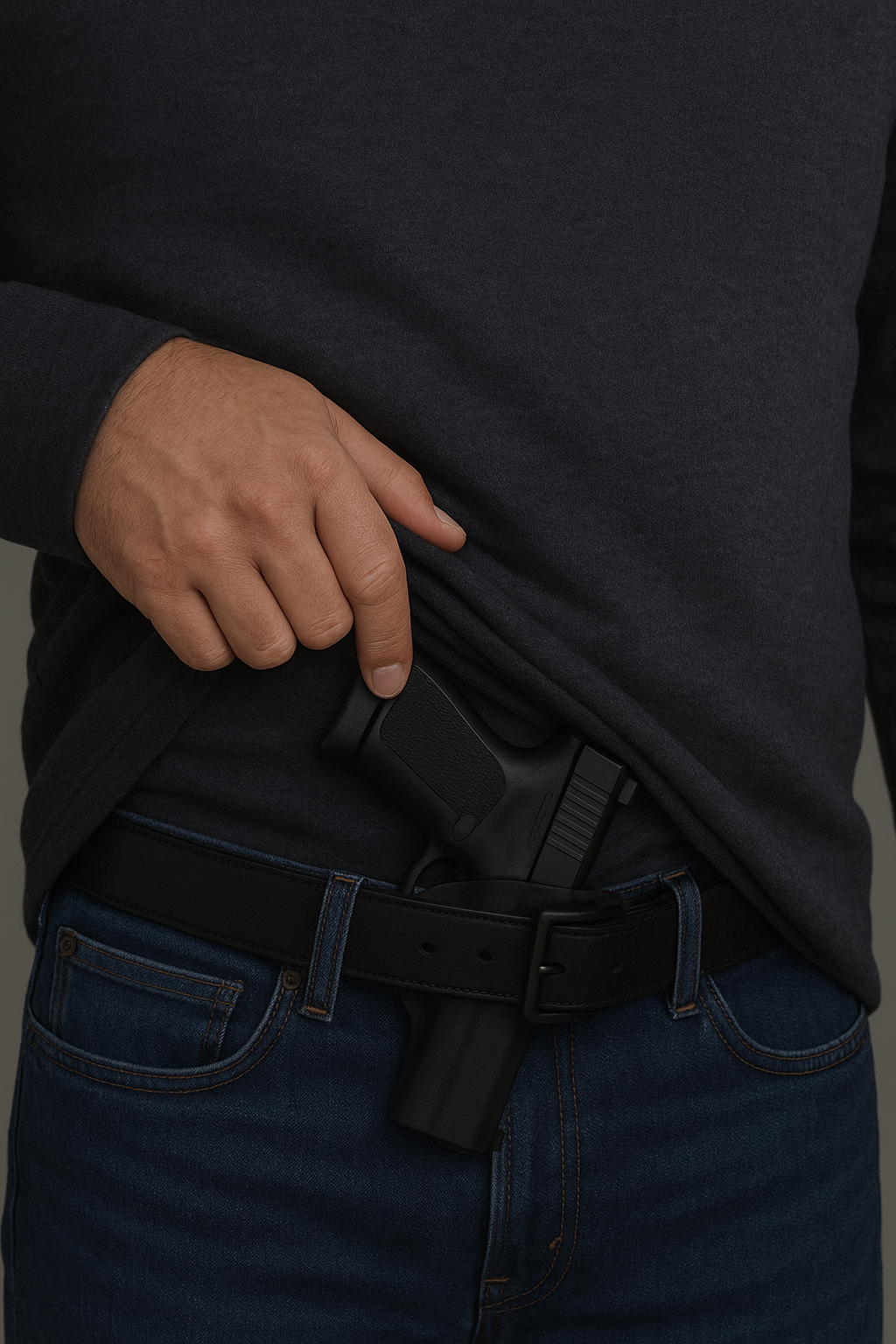
Everyday concealed carry solves a lot of problems — but it brings its own set of headaches if you don’t plan for them. From printing to comfort to legal exposures, carrying a firearm daily is as much about choices (gear, clothing, holster, training) as it is about mindset. Below is a practical, no-nonsense guide that covers the most common issues concealed carriers face, the top ten mistakes people make, the clothing and holster choices that actually work, and a few extra tips to make carry part of your normal routine.
Common issues with concealed carry
Many carriers discover that the real friction points are mundane, repetitive, and avoidable:
- Printing — the gun’s outline shows through clothing. It’s the most common reason new carriers feel exposed.
- Comfort — poor holster or placement makes sitting, driving, or bending miserable.
- Accessibility vs. discretion — finding a spot that’s both easy to access and hard to see.
- Retention & safety — keeping the gun secure during daily movement without compromising a safe holster.
- Wardrobe limitations — some outfits simply don’t conceal well, which restricts what you can wear.
- Heat/sweat and corrosion — carrying close to the body increases moisture exposure to metal parts.
- Neglecting legal & situational awareness — not knowing where you can and cannot carry, or how to interact with law enforcement.
- Equipment mismatch — poor holster/weapon/clothing combinations that never quite work together.
Top 10 mistakes concealed carriers make
- Using a cheap holster — fails on retention, safety, and draw repeatability. Buy quality.
- Ignoring training — knowing how to handle stress, legal use of force, and basic firearms safety is essential.
- Poor placement — one-size-fits-all positions don’t exist; test sitting, bending, and driving.
- Undersized clothing — tight shirts shout “printing.” Don’t skimp on fabric and cut.
- Carrying a weapon you don’t practice with — if you don’t train with it, it’s useless in a critical moment.
- No plan for law enforcement interactions — carry authority without understanding how to communicate it safely.
- Skipping retention features — especially if you work in crowded spaces or around children.
- Ignoring maintenance — sweat and grime shorten a gun’s life and can cause failures.
- Overlooking weather & layering — summer vs. winter concealment require different approaches.
- Relying on “I’ll just hide it” thinking — concealment is a system: holster + clothing + carry position + behavior.
Clothing that actually helps conceal carry
- Fit matters: Choose clothing with a little extra room in the chest/hip area; stretch fabrics are great.
- Layering: A light jacket, overshirt, or untucked shirt breaks up lines and hides printing.
- Pattern & color: Busy patterns and darker colors mask gun outlines better than solid light tones.
- Material: Thicker or textured fabrics (oxford cloth, denim, midweight knits) are more forgiving than thin tees.
- Pockets & shirts built for carry: Shirts with reinforced pockets, hidden paneling, or built-in holster slots add convenience.
Holsters & accessories that work
- Quality kydex or molded leather holsters: Offer retention and consistent indexing.
- Inside-the-waistband (IWB): Best for concealment; use a reinforced belt to stabilize.
- Outside-the-waistband (OWB) with cover garment: Comfortable for longer wear if you use a jacket or untucked shirt to cover.
- Appendix carry (AIWB): Fast access for some; requires strict training and a quality holster with good trigger coverage.
- Trigger coverage is non-negotiable: The holster must fully cover the trigger guard.
- Belt: Use a sturdy gun belt; your belt is the foundation of a stable carry system.
Extra tips
- Rotate carry positions when trying new outfits and always test sitting, reaching, and bending.
- Practice safe draws in dry-fire drills; know your clothing’s effect on your draw without live ammo.
- Don't store firearms off-body in hot/humid conditions or use protective coatings to prevent corrosion.
- Keep a small “carry checklist” (holster, belt, mag, gun, training time) and run it daily.
Concealed carry done well is invisible — not because you hide everything, but because you built a reliable system that balances safety, accessibility, and discretion. Invest in a quality holster and belt, dress intentionally, and train regularly. Do that, and your carry gun will be a tool that protects your life instead of complicating it.