
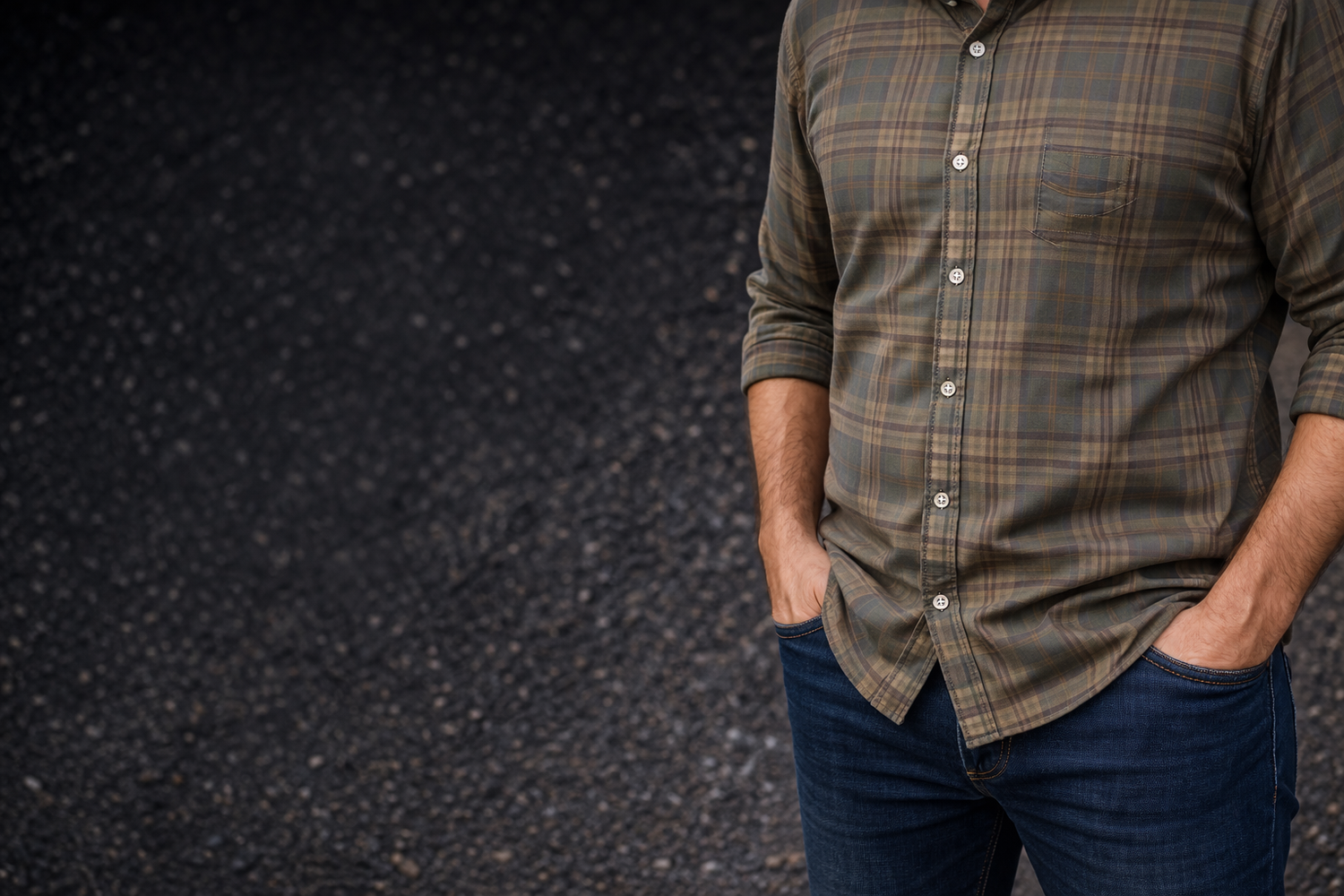
When it comes to concealed carry, most people focus on the firearm, holster, or carry position.
But there’s one factor that often gets overlooked — your clothing.
More specifically: patterns.
If you’ve ever struggled with printing (the outline of your firearm showing through your shirt), understanding how patterns work can completely change your everyday carry experience.
Let’s break down the science behind it.
What Is “Printing” and Why It Happens
Printing occurs when the shape of your firearm becomes visible through your clothing.
This usually happens due to:
-
Tight or thin fabric
-
Solid colors
-
Direct light hitting your waistline
-
Movement (bending, sitting, reaching)
The human eye is extremely good at recognizing shapes and outlines, especially when they contrast against a smooth surface.
That’s where patterns come in.


The Science: How the Eye Detects Shapes
Your brain is constantly scanning for patterns and recognizable shapes.
In a solid-colored shirt, any disruption — like the outline of a firearm — becomes obvious because:
-
There’s no visual distraction
-
Edges are clearly defined
-
Contrast is easy to detect
In simple terms:
- Solid colors highlight shapes
- Patterns break them up
How Patterns Disrupt Printing
Patterns work by breaking up visual continuity.
Instead of a clean, uninterrupted surface, patterns are introduced:
-
Multiple lines and shapes
-
Variations in color and shading
-
Visual “noise” that confuses the eye
This makes it significantly harder to detect the outline of a firearm.
Think of it like camouflage.
The same concept used in military camo applies here:
-
Disrupt the outline
-
Blend into the background
-
Make shapes harder to identify
Even subtle patterns can dramatically reduce printing.
Why Some Patterns Work Better Than Others
Not all patterns are created equal.
The most effective patterns for concealed carry have:
Irregular Shapes
Randomized designs are harder for the brain to process.
Medium Contrast
Too little contrast = ineffective
Too much contrast = draws attention
Balanced contrast works best.
Layered Textures
Depth in the design helps break up shadows and outlines.
Movement in the Pattern
Flowing or scattered patterns work better than rigid grids.
The Problem with Solid Shirts
Solid shirts — especially tight-fitting ones — are one of the biggest causes of printing.
They:
-
Highlight every contour
-
Reflect light evenly
-
Make outlines more visible
Even darker colors don’t fully solve the problem.
Black shirts still print.
Tight shirts almost always print.
The issue isn’t just color — it’s the lack of visual disruption.
Why Fit + Pattern Work Together
Patterns are powerful, but they work best when combined with proper fit.
For optimal concealment:
-
Slightly relaxed fit
-
Fabric that drapes naturally
-
Enough structure to avoid clinging
Too tight = printing
Too baggy = unnatural and uncomfortable
The goal is controlled looseness with visual disruption.
Real-World Example
Imagine two people carrying the same firearm in the same position:
Person A:
Tight solid shirt
Smooth fabric
Person B:
Patterned shirt
Slightly relaxed fit
Same setup. Completely different outcome.
Person A prints.
Person B blends in.
That’s the difference.
Why We Design Strong Side Apparel This Way
At Strong Side Apparel, patterns aren’t just about style — they’re functional.
Every design is created with concealment in mind:
-
Patterns that disrupt outlines
-
Fabrics that move naturally
-
Fits that balance comfort and concealment
Because concealed carry isn’t just about what you carry — it’s about how you carry it.

Final Thoughts
If you’re serious about everyday carry, you need to think beyond holsters and firearms.
Your clothing is part of your system.
Patterns are one of the simplest, most effective ways to:
-
Reduce printing
-
Improve concealment
-
Increase confidence
Small changes make a big difference.